11 Uses for Tension Rods in a Small Apartment
A tension rod is a telescopic pole that stays up by pressing outwards against two facing surfaces. There are no screws and no adhesive, so removal means twisting it loose and lifting it out. For a few dollars or pounds it gives you a rail wherever two solid surfaces face each other.
The catch is that rods vary a lot in strength, and the surfaces they press on matter as much as the rod. This guide starts with which type to buy and how to fit it, then lists eleven uses, ordered roughly from lightest load to heaviest.
Which type of rod to buy
| Type | Typical span | Realistic load | Best for |
|---|---|---|---|
| Mini spring rod | 10–28 in (25–70 cm) | 2–5 lb (1–2.2 kg) | Drawers, cupboards, cafe curtains |
| Standard spring rod | 28–48 in (70–120 cm) | 5–10 lb (2.2–4.5 kg) | Light curtains, under-sink rails |
| Twist-lock or screw-jack rod | 24–80 in (60–200 cm) | 20–30 lb (9–13.5 kg) at short spans | Clothes, shower curtains, heavier drapes |
Two points apply to every type. First, capacity falls as the rod extends. A rod rated 30 lb (13.5 kg) at 30 in (76 cm) may manage only a third of that near its full length. Second, the rating assumes solid, non-slip surfaces. Glossy tile and fresh paint reduce grip.
Buy a rod whose range puts your span somewhere in the middle. A rod at full stretch has little overlap between its two tubes and bends easily.
How to fit one so it stays up
- Measure the span at the exact height the rod will sit. Walls and cupboards are rarely parallel.
- Wipe both contact points with a damp cloth and dry them. Dust and grease are the usual reason rods slip.
- Extend the rod about ½–1 in (1–2.5 cm) longer than the span, compress it and set it in place. For twist-lock types, position it and then turn until firm.
- Check with a level, then pull down on the centre with your hand before loading it.
Firm is enough. Over-tightening a heavy-duty rod can dent plasterboard (drywall), crack a tile or push a cupboard side out of square. On plasterboard, try to position the ends near a corner or over a stud, where the wall is stiffer. If the end caps leave marks, a small square of non-slip shelf liner behind each one spreads the pressure and improves grip.
The 11 uses
1. Drawer dividers
Mini spring rods running front to back split a deep drawer into lanes for utensils, socks or folded T-shirts. Two or three rods per drawer cost less than a fitted organiser and adjust to any width.
2. Upright dividers for trays and boards
Fit three or four mini rods vertically between a cupboard shelf and the one above, about 2–3 in (5–8 cm) apart. Baking trays, chopping boards and pan lids then stand on edge like files, so you can pull one out without unstacking the rest.
3. An under-sink rail for spray bottles
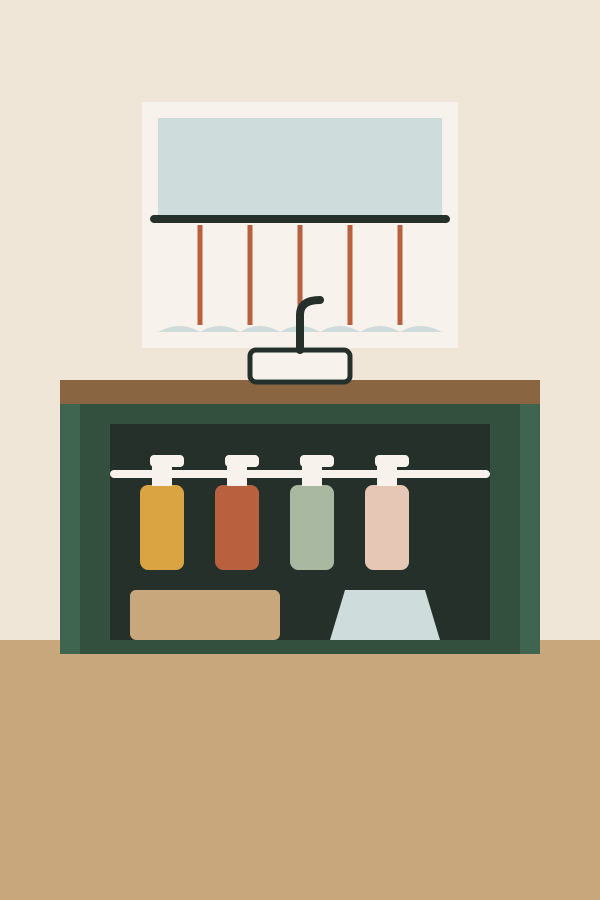
Run a standard rod across the under-sink cupboard about 12–14 in (30–35 cm) above the base and hang spray bottles from it by their triggers. This clears the cupboard floor for buckets and boxes. Six full 500 ml bottles weigh around 7 lb (3.2 kg), which is within range for a standard rod at this short span. Keep the rod clear of pipes and the waste trap.
4. A cafe curtain for privacy
A mini or standard rod inside the window recess, halfway up, holds a light cotton or linen half-curtain. It screens the lower part of the window and leaves the top clear for daylight. This suits kitchen and bathroom windows that face a neighbour.
5. Scarves, belts and jewellery
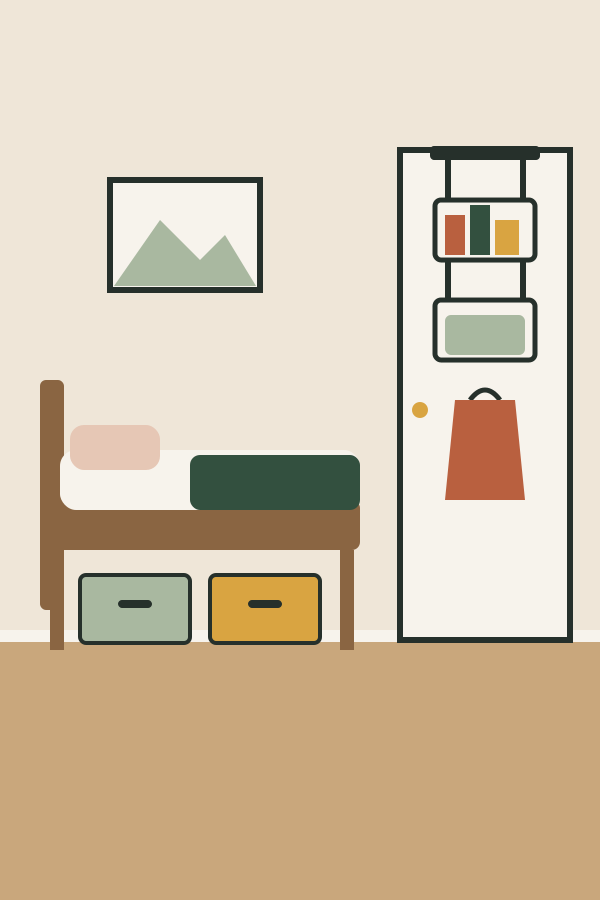
A short rod across an alcove or inside a wardrobe, with S-hooks or shower-curtain rings, keeps scarves, belts, bags and necklaces visible and untangled.
6. A skirt to hide clutter
Open shelving, a pedestal sink or the space under a desk can be screened with a short fabric skirt on a rod. Use clip rings so the fabric comes off for washing. The storage behind it can then be as untidy as it likes.
7. A shoe rack in an alcove
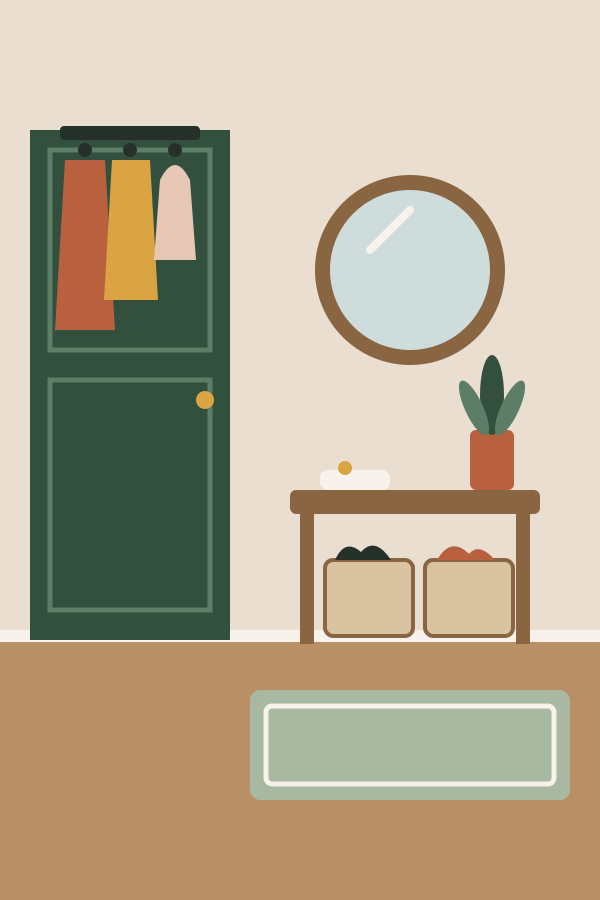
Fit two rods across a narrow alcove or the bottom of a wardrobe, one about 4 in (10 cm) behind and slightly above the other. Shoes rest with heels on the back rod and toes on the front. Stack pairs of rods every 7–8 in (18–20 cm) for several tiers. Use twist-lock rods here, since six pairs of shoes can weigh 10 lb (4.5 kg) or more.
8. Full-length curtains in a window recess
Where the window sits in a recess, a twist-lock rod inside it holds proper curtains with no bracket. Weigh the curtains first. A pair of unlined cotton panels is about 3–5 lb (1.4–2.3 kg). Lined blackout or thermal curtains can reach 8–12 lb (3.6–5.4 kg) and need a heavy-duty rod at a modest span.
9. A room divider or wardrobe "door"
In a studio, a rod across an alcove or between two walls up to about 6 ft (1.8 m) apart can carry a light curtain that screens off the bed or replaces a missing wardrobe door. Keep the fabric light, because long spans hold much less.
10. A second rod over the bath
A second shower rod set towards the back wall of the bath gives you a place to drip-dry laundry and hang wet towels out of sight. Use a rust-resistant twist-lock rod and keep loads modest: wet towels weigh two to three times their dry weight. Press the ends against tile faces, not across grout lines.
11. A second clothes rail
Most wardrobes have one rail with wasted space beneath the shirts. A heavy-duty rod fitted about 40 in (100 cm) below the top rail doubles the hanging space for shorter items. Clothing is heavy: allow roughly 1 lb (450 g) for each shirt on a hanger and more for jackets. Stay well under the rating, and put coats on the fixed rail.
What not to use a tension rod for
- Anything a person might grab for balance, such as a grab rail in a shower.
- Pull-up bars or exercise equipment, unless the product is designed and rated for it.
- Heavy hanging plants above head height or over a walkway.
- Stair gates or child barriers. Use products built for that purpose.
Frequently asked questions
How much weight can a tension rod hold?
Light spring rods hold roughly 5 to 10 lb (2.2 to 4.5 kg). Heavy-duty twist-lock rods are often rated 20 to 30 lb (9 to 13.5 kg) at short spans, and noticeably less when extended towards their full length. Always check the rating for your span.
Do tension rods damage walls?
Used at normal tightness on sound surfaces they usually leave nothing more than a faint mark that wipes off. Over-tightening can dent plasterboard or crack tiles, and rubber caps can lift soft or fresh paint, so pad the ends and tighten only until firm.
Why does my tension rod keep falling down?
The common causes are dusty or greasy contact points, a rod extended too close to its maximum length, too much weight, or glossy surfaces with little grip. Clean the surfaces, use a longer rod and add non-slip pads behind the end caps.
Can a tension rod hold blackout curtains?
A heavy-duty twist-lock rod can at a modest span, since lined blackout curtains often weigh 8 to 12 lb (3.6 to 5.4 kg) a pair. A light spring rod is not strong enough.
Will a tension rod work on tile?
Yes, as long as the ends press on the flat face of a tile rather than a grout line and the rod is not over-tightened. Clean off soap film first, because it makes the surface slippery.
Can I use a tension rod between two plasterboard walls?
Yes for light to moderate loads. Place the ends near corners or over studs where the wall is stiffer, and keep the tension moderate so the board is not dented.