12 Small-Apartment Storage Ideas That Need No Drilling
Small apartments rarely lack space altogether. They lack usable space, because the gaps are in awkward places: above the door, under the bed, beside the fridge, at the back of deep cupboards. Fitted shelving would solve it, and fitted shelving needs a drill.
These twelve ideas reach the same spaces with nothing fixed to the walls. Before buying anything, spend ten minutes with a tape measure. Most storage that gets returned was bought by eye. The measurement to take is listed with each idea, along with an honest weight limit and a rough price.
Doors and the backs of things
1. Over-door racks and hooks
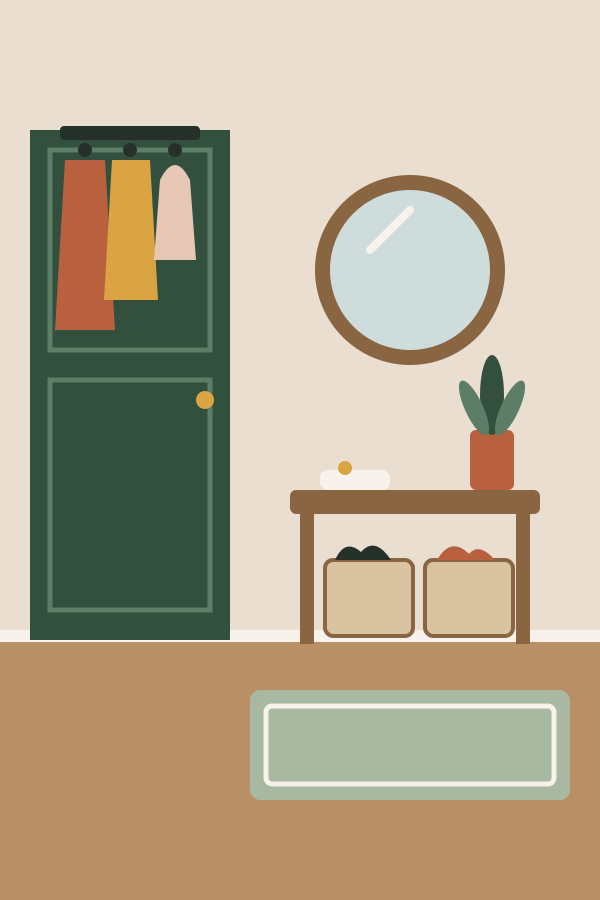
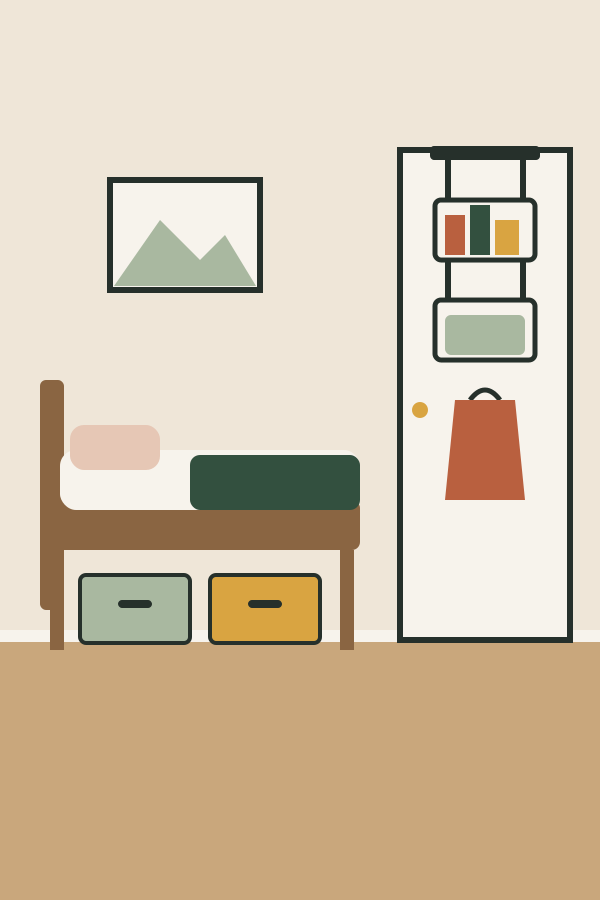
Every internal door is roughly 15 sq ft (1.4 sq m) of unused vertical storage. Over-door hooks take coats, bags and towels. Over-door racks with baskets take cleaning supplies, toiletries or pantry items.
Measure: door thickness, usually 1⅜–1¾ in (35–44 mm), and the gap between the top of the door and the frame. Most hangers need about ⅛ in (3 mm) of clearance. If the door sticks afterwards, the hanger is too thick.
Limit: a typical multi-hook bar is rated 20–35 lb (9–16 kg) in total. Hollow-core doors and their hinges are not built for much more. Stick felt pads where metal touches paint. Cost: $10–$35 (£8–£30).
2. Adhesive hooks inside cupboard doors
The inside of a cupboard door holds pan lids, measuring cups, oven gloves, a hairdryer or cleaning cloths. Small adhesive hooks rated 1–3 lb (0.45–1.3 kg) are enough. Check the door still closes against the shelf edge before pressing the hooks on. Laminate and varnished wood are good surfaces. Raw or oiled wood is not.
3. Magnetic racks on the fridge
The side of a fridge is a steel wall. Magnetic spice racks, paper-towel holders and shelves are usually rated 5–10 lb (2.2–4.5 kg) each. Test with a fridge magnet first, because some stainless-steel panels are not magnetic. Cost: $15–$30 (£12–£25).
Low and hidden space
4. Under-bed boxes
A double bed covers about 28 sq ft (2.6 sq m) of floor. Low lidded boxes or zipped fabric bags turn that into storage for spare bedding and out-of-season clothes.
Measure: floor to the underside of the bed rail, not to the mattress. Many beds have only 5–7 in (13–18 cm). Buy boxes at least ½ in (1 cm) shorter than the gap. Wheeled boxes are worth the extra on carpet. Cost: $12–$30 (£10–£25) each.
5. Bed risers
If the gap is too small, risers under each leg add 3–6 in (8–15 cm). Use a set rated for the combined weight of the bed, mattress and sleepers. Sets are commonly rated around 1,200 lb (540 kg). The cup of each riser should be wider than the bed leg so the leg cannot slip out. They are not suitable for beds with a centre support leg unless you buy a riser for that too. Cost: $15–$30 (£12–£25).
6. A storage ottoman or bench
Seating that opens does two jobs. A bench about 40 in (100 cm) long at the foot of the bed or by the door holds roughly 3 cu ft (85 litres), which is enough for a winter duvet. Check the lid has a soft-close stay if children are around. Cost: $40–$120 (£35–£100).
7. Suitcases as storage
Empty suitcases waste the space they take up. Fill them with seasonal clothes or spare linen, and nest smaller cases inside larger ones when they are not needed. This costs nothing.
Narrow gaps and inside cupboards
8. A slim rolling cart
The gap beside a fridge, washing machine or wardrobe is often 5–8 in (13–20 cm) wide. Slim three-tier carts on wheels are made for exactly this and hold tins, bottles or cleaning products.
Measure: the narrowest point of the gap, including skirting boards, then subtract ½ in (1 cm). Leave an air gap beside appliances that have vents on the side. Cost: $20–$45 (£18–£40).
9. Shelf risers and stackable inserts
Kitchen cupboards usually have 12–14 in (30–36 cm) between shelves and plates stacked only 4 in (10 cm) high. A freestanding wire shelf riser splits the space in two. Under-shelf baskets that slide onto the shelf above add a third layer for wraps and cloths. Neither touches the cupboard. Cost: $8–$20 (£6–£16) each.
10. Tension rods
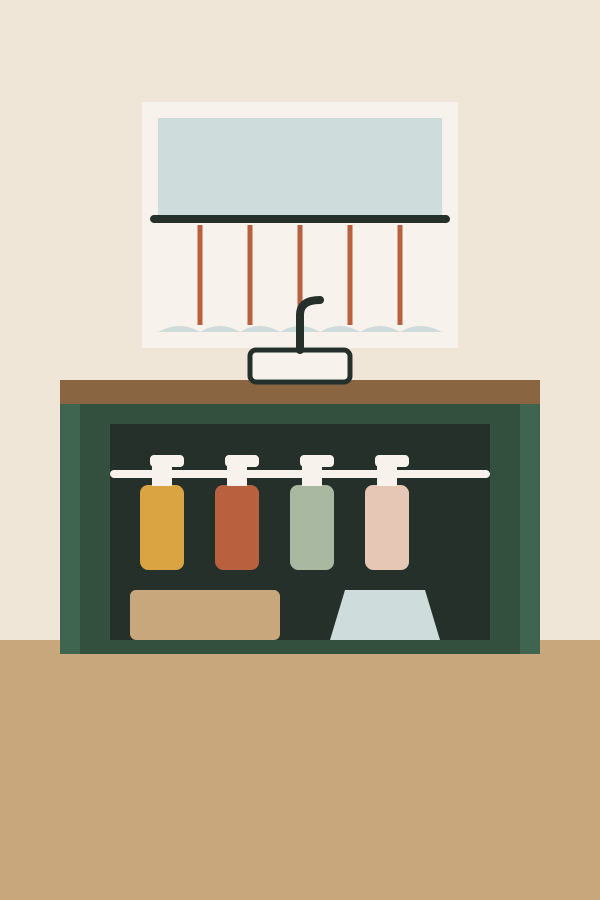
A spring or twist-lock rod between two solid surfaces makes a rail with no fixings: under the sink for spray bottles, across an alcove for a second row of hanging clothes, upright in a cupboard to divide baking trays. Light spring rods hold about 5–10 lb (2.2–4.5 kg), and heavier twist-lock rods are often rated 20–30 lb (9–13.5 kg) at short spans. We go through the options in 11 uses for tension rods.
Going up
11. Hanging wardrobe organisers
Fabric hanging shelves attach to the existing clothes rail with hook-and-loop straps and give five or six cubbies for jumpers, shoes or bags. They work best when not overloaded, at around 5 lb (2.2 kg) per shelf. Check the rail itself feels solid. A fully loaded organiser can add 25–30 lb (11–13.5 kg) to it. Cost: $12–$25 (£10–£20).
12. Tall freestanding shelving
Where there is one free stretch of wall, use the full height. A unit 70–80 in (178–203 cm) tall holds about twice as much as a waist-high one on the same floor area. Put heavy items on the bottom two shelves and light ones at the top.
Tall units can tip. If an anti-tip strap is supplied, ask the landlord whether one small fixing is acceptable. Most agree for safety. If not, choose a lower and deeper unit, or a metal garment rack with a wide base and shelves beneath. Cost: $45–$150 (£40–£130).
Where to start
If the budget only stretches to a few of these, this order gives the most storage per pound or dollar in most small apartments:
- Clear out first. Storage for things you do not use is wasted money.
- Under-bed boxes, for the largest volume.
- One over-door rack on the bathroom or bedroom door.
- Shelf risers in the two busiest kitchen cupboards.
- A slim cart, if you have a suitable gap.
Frequently asked questions
How can I add storage to a rental without drilling?
Use doors, the space under the bed, narrow gaps and the insides of cupboards. Over-door racks, under-bed boxes, slim rolling carts, shelf risers and tension rods all add storage with nothing fixed to the walls.
How much weight can an over-door hook hold?
Most multi-hook bars are rated between 20 and 35 lb (9 and 16 kg) in total, and single hooks less. Hollow-core doors and their hinges are light, so keep heavy bags and wet coats to a sensible number.
Are bed risers safe?
They are safe when the set is rated above the combined weight of the bed, mattress and sleepers, the bed legs sit fully inside the cups, and every leg including any centre support is raised by the same amount on a level floor.
What is the best storage for a studio apartment?
Pieces that do two jobs: a bed with boxes beneath it, a storage bench that works as seating, and one tall shelving unit that also divides the sleeping area from the living area.
Do adhesive hooks work inside kitchen cupboards?
Yes on laminate, melamine and varnished wood that has been wiped with rubbing alcohol. They do not hold well on raw, oiled or greasy surfaces, so clean thoroughly and keep to light items.
How do I store winter clothes in a small apartment?
Wash and fully dry them, then pack them in under-bed boxes or inside suitcases. Vacuum bags save space for synthetic bedding and knitwear, but down and feather items keep their loft better stored loosely.